Who Tells Our History? Rewriting Latin America
Transcript
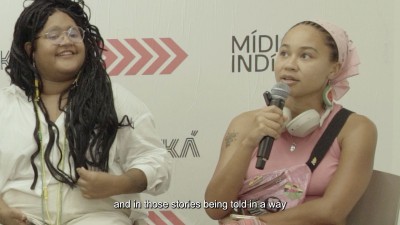
What is climate justice also within Latin America? How do we understand it, how do we connect places, connect these two processes, and understand what the history of this region means as well? One of the points I’ve been reflecting on a lot recently is: who told us this history? Who told the history of this region? Where was it written?
I also did some research, because with the launch of what I’m about to share with you today, one of the central ideas is to build a Latin American textbook. But why? From where do we tell this history? Where do we begin in order to truly retell these stories? Do we want to tell and retell these stories to everyone, or do we want our own people, first, to recognize where these stories come from?
For me, at this moment, Latin America is bubbling from a place where it needs to recognize and understand the past of the region that has still been denied to us. We are still trying to piece together what this region meant, trying to understand the enslaving history of this racist continent, and so many other aspects—thinking about a region that we still haven’t fully understood, about the history that shaped what we experience here today.
I have a very strong desire to understand what Black Latin America is, and where we can truly retell these fragments of history. Who brought us here? Where did the things that shaped us in this place come from? What is my connection to my Black brothers and sisters in Colombia? What connections exist between these places that tell stories through their very existence?
So I question the creation of a textbook that we could bring into schools, and at the same time I ask: what already exists? Our own knowledge, our own memories—they are already the guardians of the history we heard and the history we will tell. So it is up to us. And I think this is part of the mission I’m building right now: to understand where we are going in relation to the geopolitical effort of understanding storytelling, of understanding or retelling paths as a political tool.
Climate justice in Latin America cannot be separated from the histories that shaped the region. From the Amazon, Ana Rosa Cyrus questions who has told the story of Latin America, where it was written, and whose voices were left out. She reflects on the need to reconnect fragmented histories, especially those of Black Latin America, and to recognize memory, ancestry, and lived experience as sources of knowledge.
As part of the leadership of Engajamundo, she frames storytelling as a political tool—one that can help communities understand their past, strengthen regional connections, and redefine climate justice on their own terms.

How do we diversify climate voices?
Racialized, feminized voices have been silenced and to tackle oppression, we must put those voices at the center of climate action and diversify the channels and mechanisms through which we communicate solutions