Territories of Life
Transcript
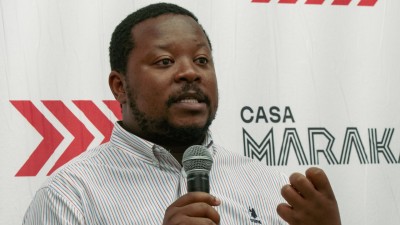
This same government recently brought forward a diagnosis by IBAMA and the Ministry of the Environment stating that the vast majority of preserved territories are under the stewardship of Indigenous peoples and Quilombola territories. However, the government does not recognize that it needs to legalize and regularize Quilombola lands.
Something that has deeply concerned me is that they are selling an image abroad as if Brazil had a policy to keep the forest standing, which is not true. They are encouraging deforestation and burning for large markets, and they use Quilombola communities—who stand in opposition to all of this—as if they were enemies of the economy, enemies of capitalism.
That is not who we are. We understand that even to have an economy and a developed capitalism, the planet must remain alive. There must be water, plants, and animals. In 50 years, if we no longer have these, what will we sell? What will we trade?
So we understand that in order to have an economy, in order to have a strong capitalist system, as they claim, we must keep the planet resilient. And the planet lives. Those who make this possible, who protect and care for it, are traditional communities.
Government narratives often praise forest conservation while failing to recognize and protect the communities that make it possible. Across Brazil, Quilombola and Indigenous territories remain central to environmental preservation, yet continue to face legal and political exclusion. For Antônio Crioulo of Coordenação Nacional de Articulação das Comunidades Negras Rurais Quilombolas (CONAQ), defending land rights is inseparable from defending life itself, affirming that true economic development depends on healthy ecosystems and the leadership of traditional communities.

How do we diversify climate voices?
Racialized, feminized voices have been silenced and to tackle oppression, we must put those voices at the center of climate action and diversify the channels and mechanisms through which we communicate solutions