Stories Rooted in Our Territory
Transcript
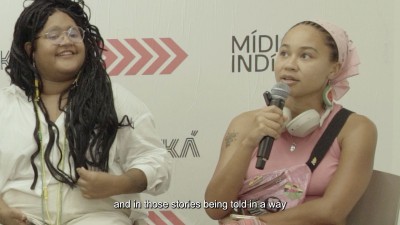
I come from a very beautiful and very diverse region, but one that also carries many difficulties and challenges. And it’s there, in that reality, that we as young people rise up and raise our voices as spokespeople, as leaders of our territory, beginning to empower ourselves and to make visible the narratives that exist in our communities. This is also a response to the stigma and sensationalism pushed by mainstream media, and the way those media harm our territory. So we decided to narrate ourselves, from within, instead of letting outsiders come in to portray us on our behalf. Many times, the voices we share are not heard.
While many communities are shaped by both richness and hardship, young people are finding ways to speak for themselves and their territories. In regions often misrepresented by mainstream media, local voices work to challenge stigma and tell their own stories. Narrating life from within the community is a way to strengthen identity, affirm leadership, and ensure that Indigenous perspectives are heard on their own terms.

How do we diversify climate voices?
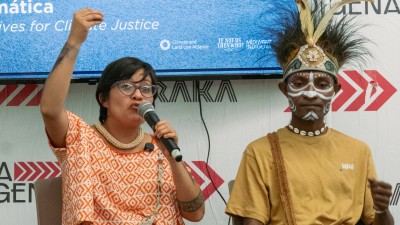
Racialized, feminized voices have been silenced and to tackle oppression, we must put those voices at the center of climate action and diversify the channels and mechanisms through which we communicate solutions