Beyond Writing: Black Latin American Memory
Transcript
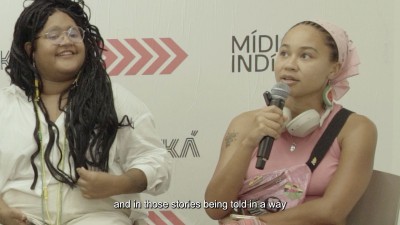
The Fund ación comes from a need to understand regional cooperation so that we can bring together these pieces—each of them containing many different universes of what Latin America means. But how can we prepare all of them to be in dialogue, in contention, with the global sphere? I truly want to dedicate myself and work so that Black Latin America can unite and take part in shaping the discourse on Blackness throughout the world. For me, this is about beginning the process of retelling what the history here means.
Perhaps these stories are not connected to the means we already know. It’s not only about paper, or writing, or anything like that. It’s also about smell, taste, about what we feel within places. And we are not yet prepared to build all of this, because this is the moment for us to understand our ancestral techniques as well. For many, many years, especially as a Black woman in the Amazon, in this city that is welcoming you, I did not have access to what other ways of identifying power and retelling the history of the place I come from might mean. And without a doubt, what we have most here in Latin America, in the Amazon, and in other places, is technique. We know what we are doing. So how do we equip our people with the power to retell where they come from and to reclaim their own memories?
Regional cooperation is key to strengthening Afro-descendant voices across Latin America and positioning them within global climate debates. Speaking from the Amazon, Ana Rosa Cyrus reflects on the need to unite Black Latin American communities to reclaim their histories and redefine narratives about identity, territory, and power. As part of the Executive Board of Engajamundo, she emphasizes ancestral knowledge, lived experience, and cultural memory as essential tools for diversifying climate voices and reshaping global discourse.
Engajamundo is a youth-led organization that empowers young people to engage politically and drive solutions to Brazil’s and the world’s socio-environmental challenges.

How do we diversify climate voices?
Racialized, feminized voices have been silenced and to tackle oppression, we must put those voices at the center of climate action and diversify the channels and mechanisms through which we communicate solutions